Bourboulos 29
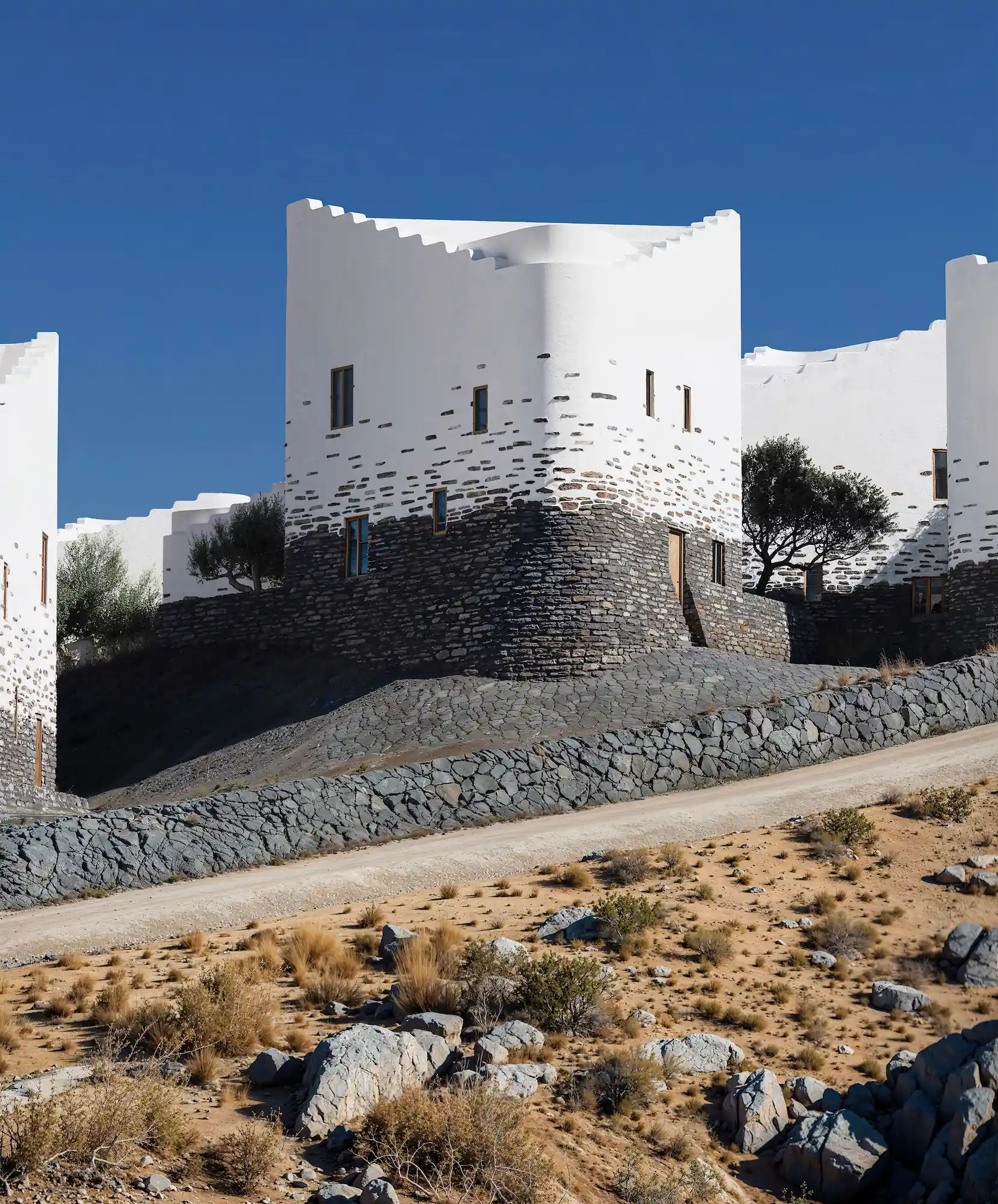
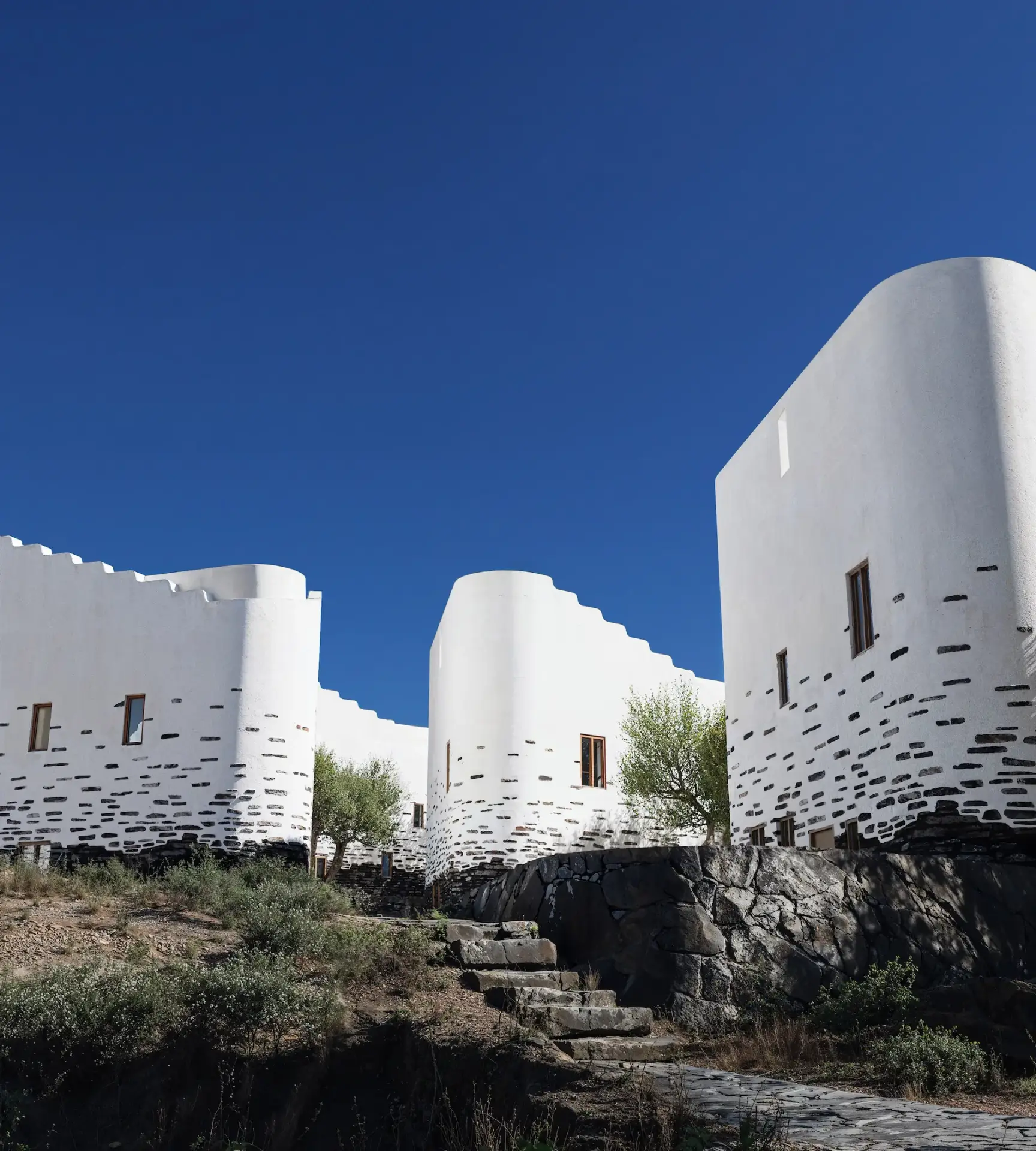
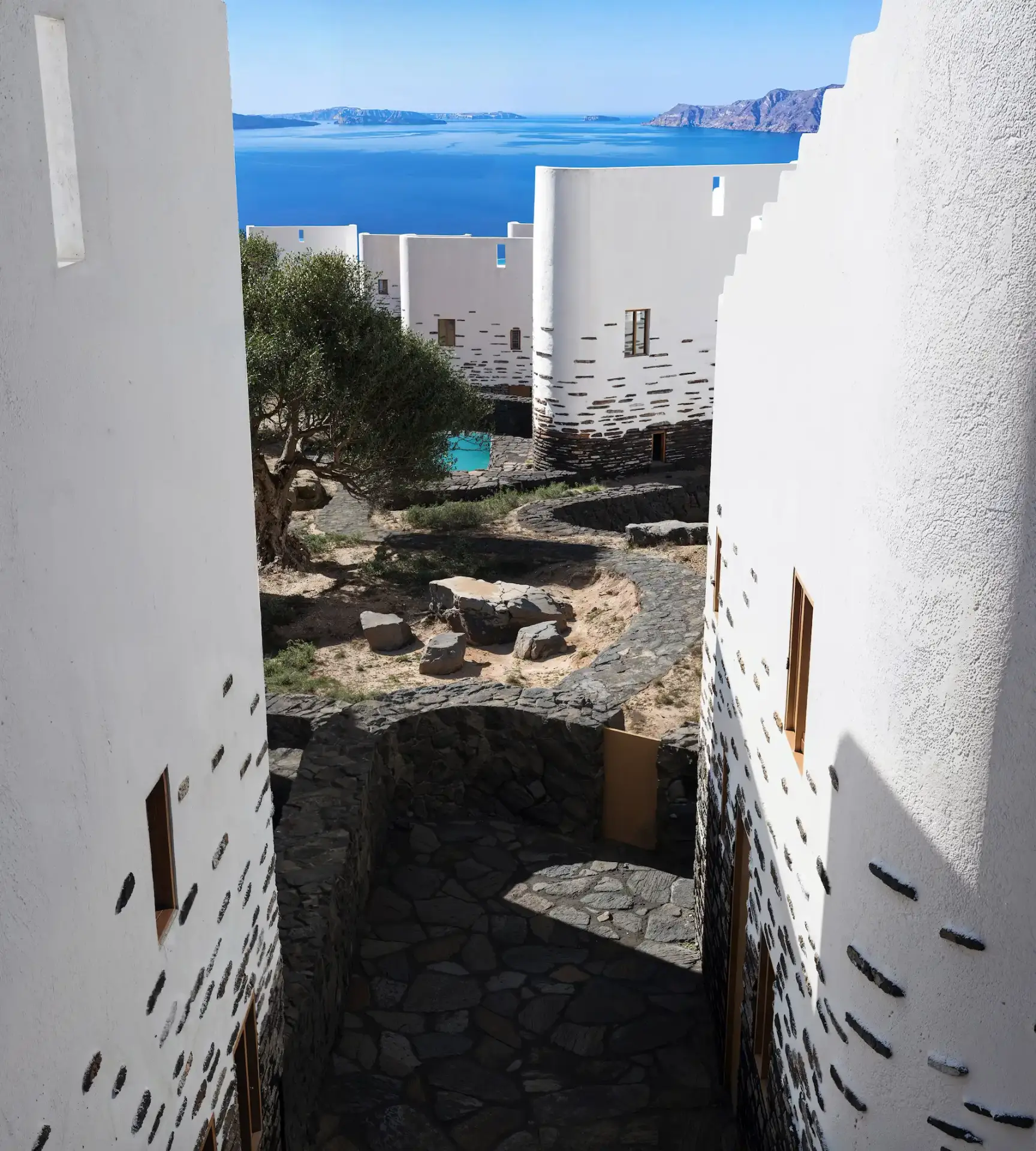
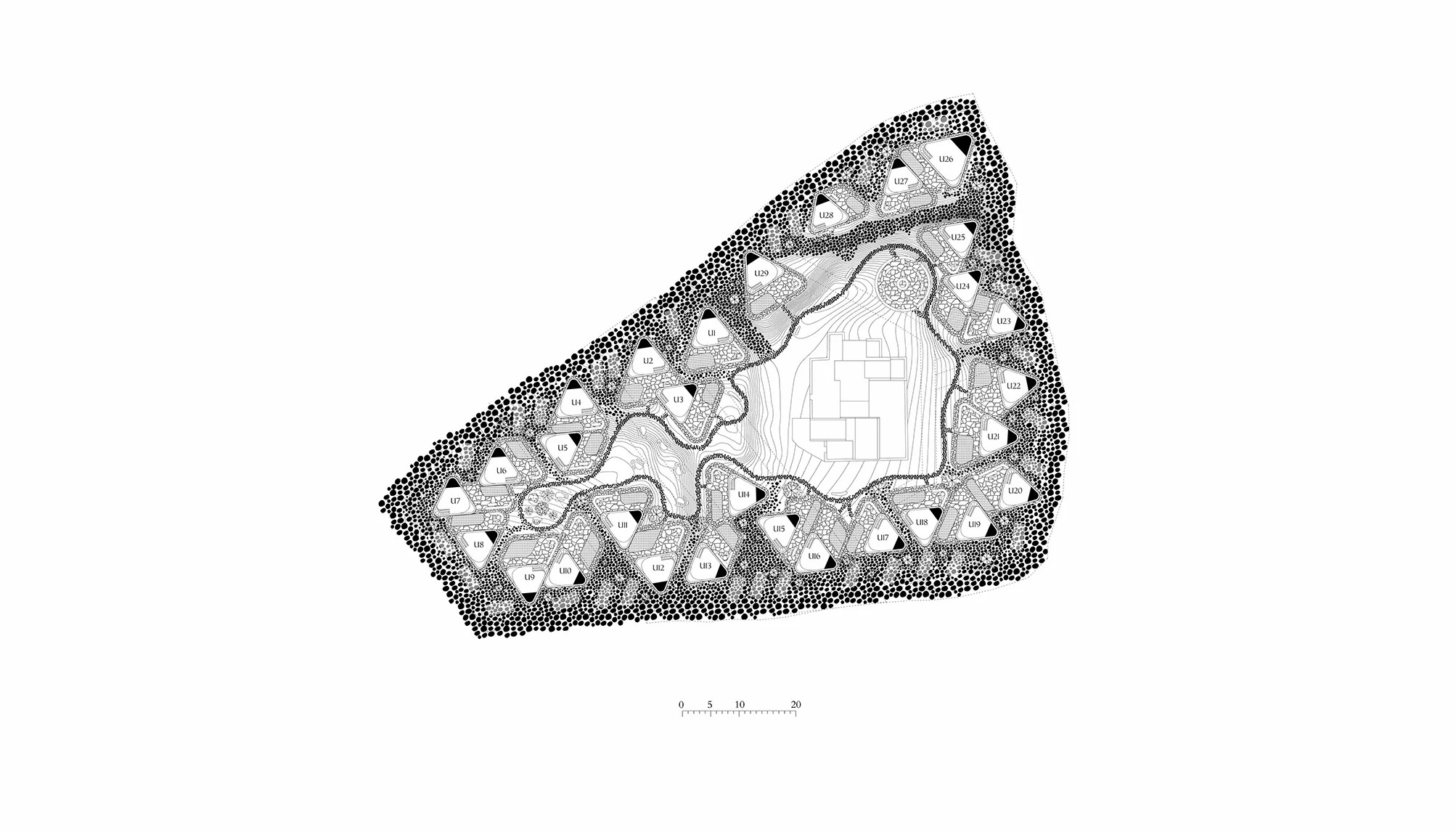
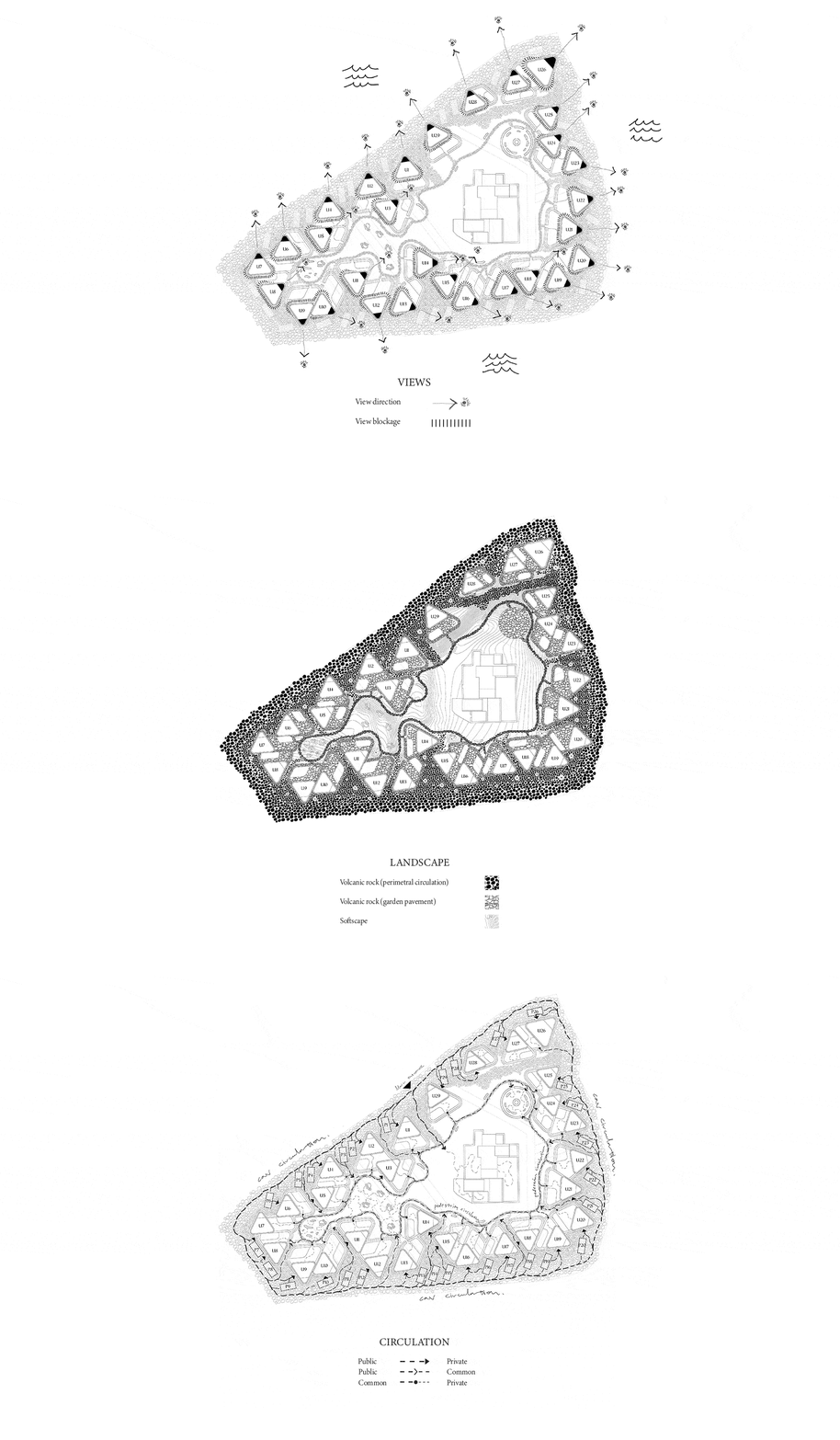
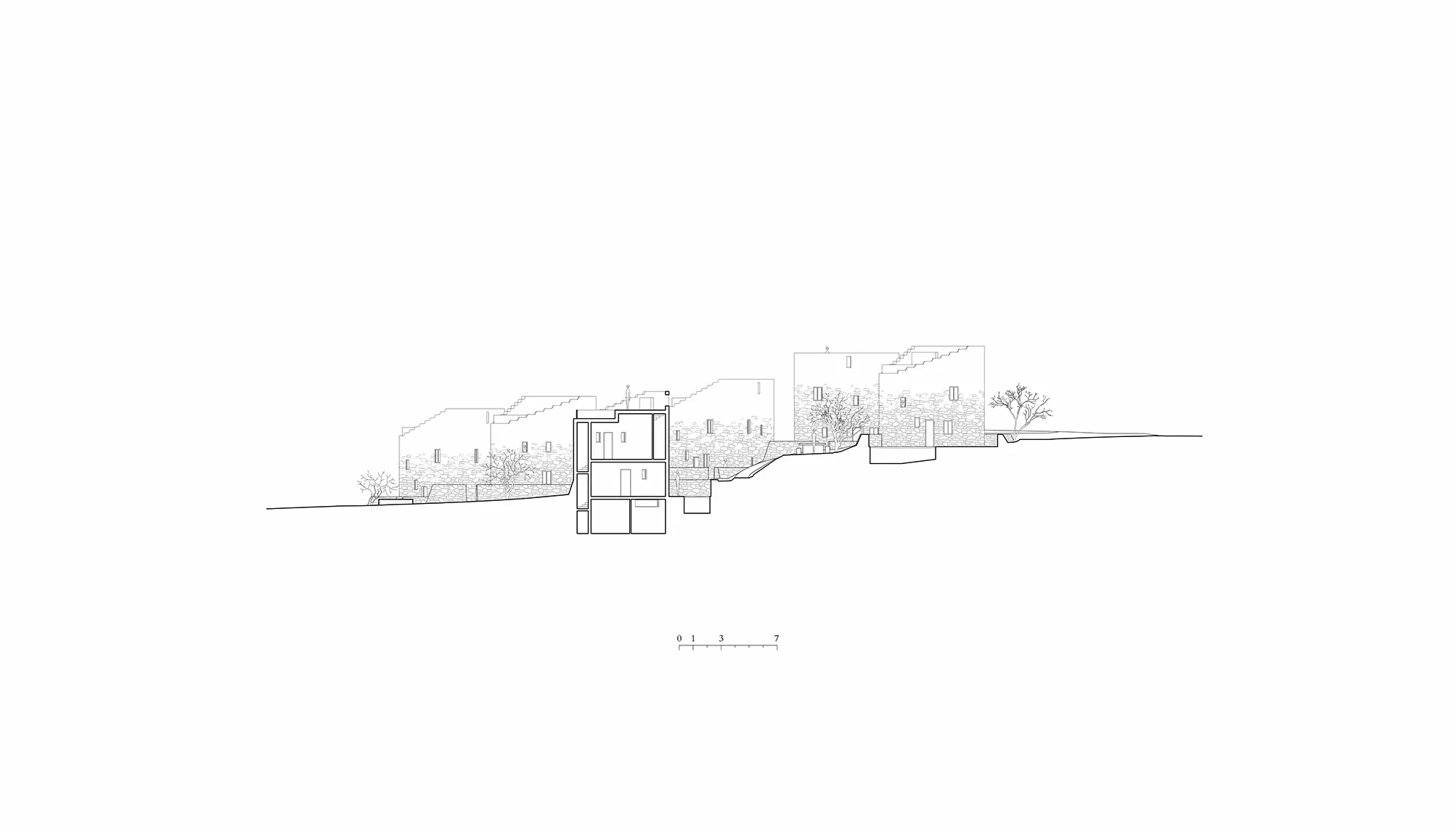
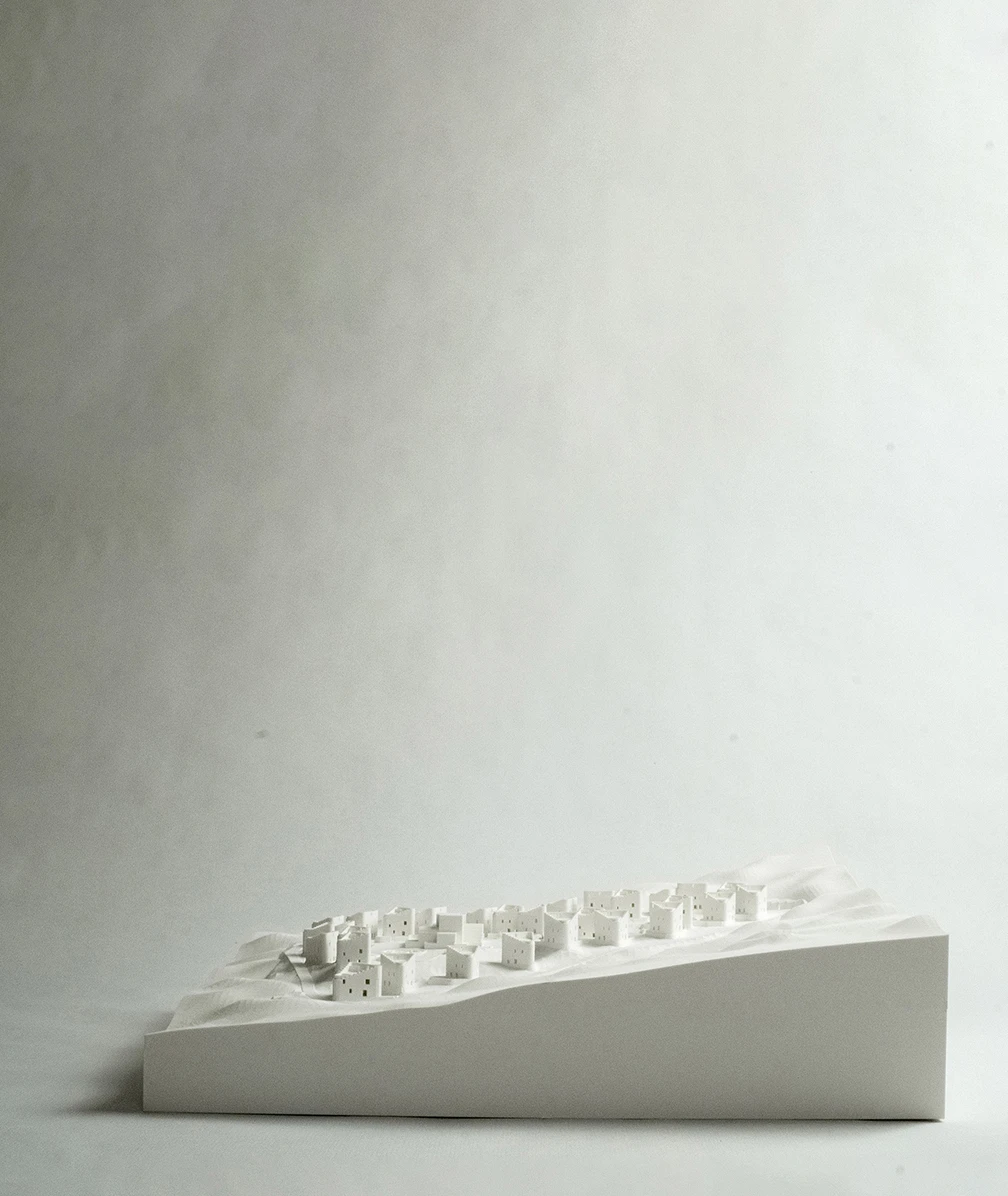
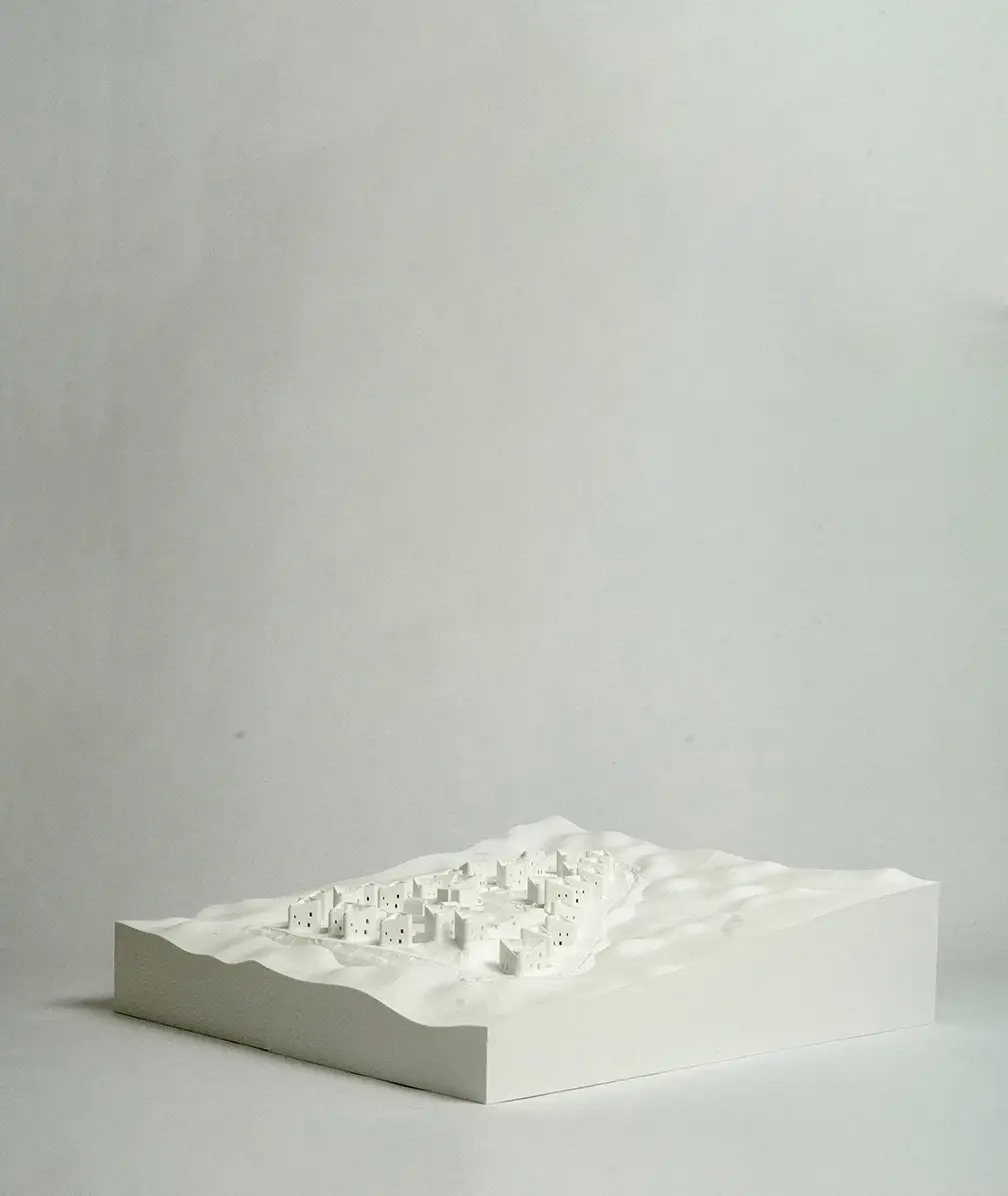
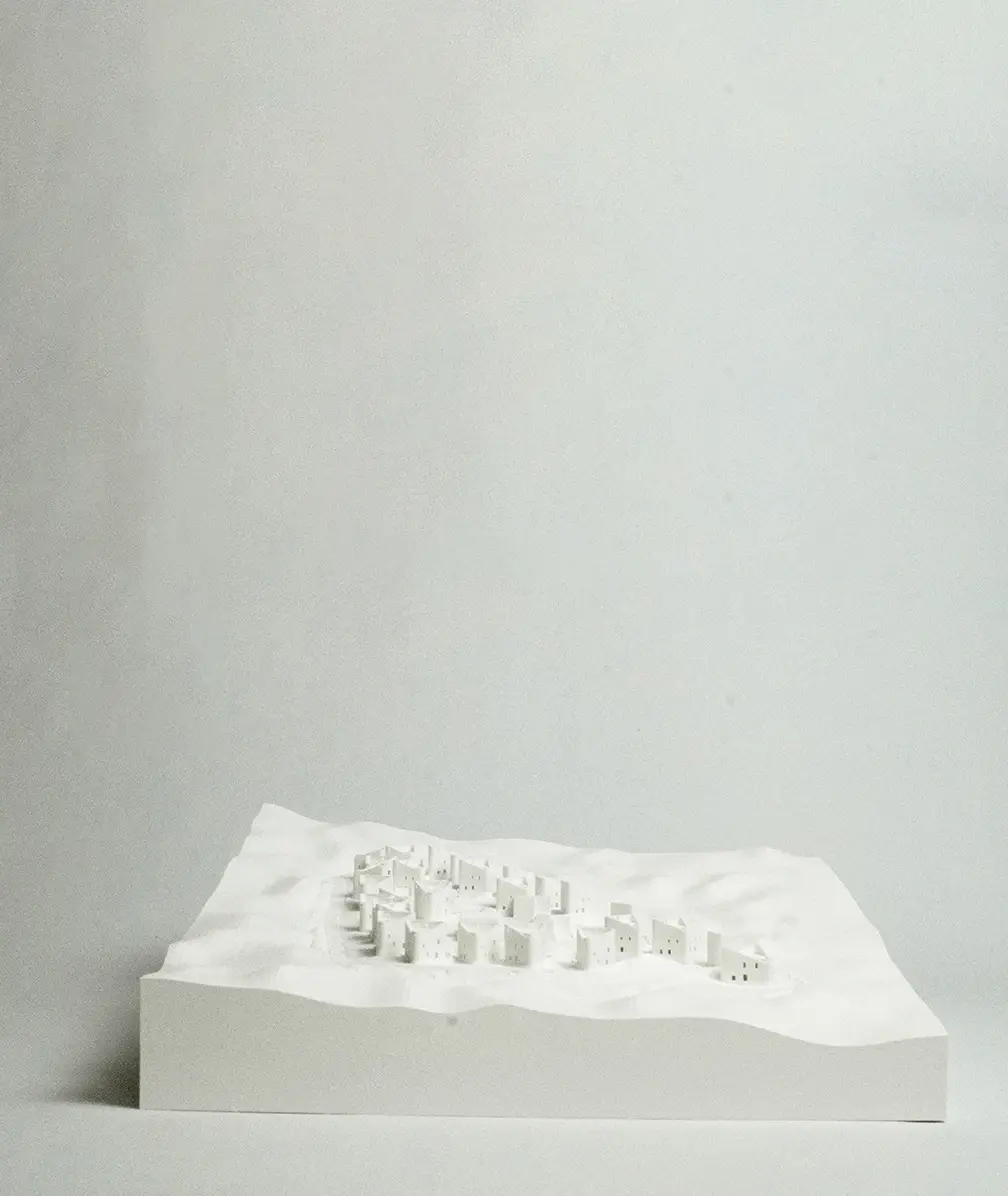
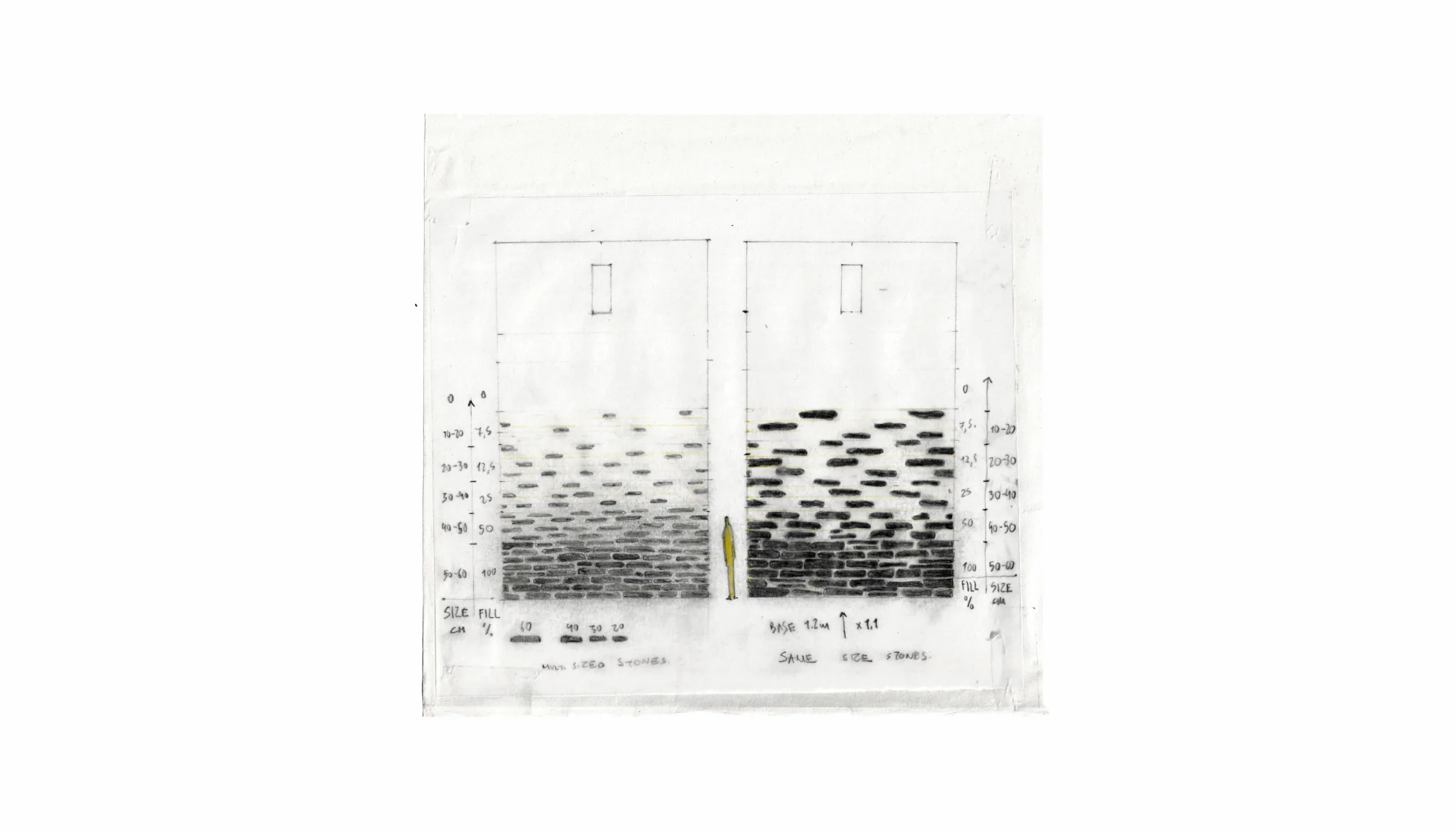
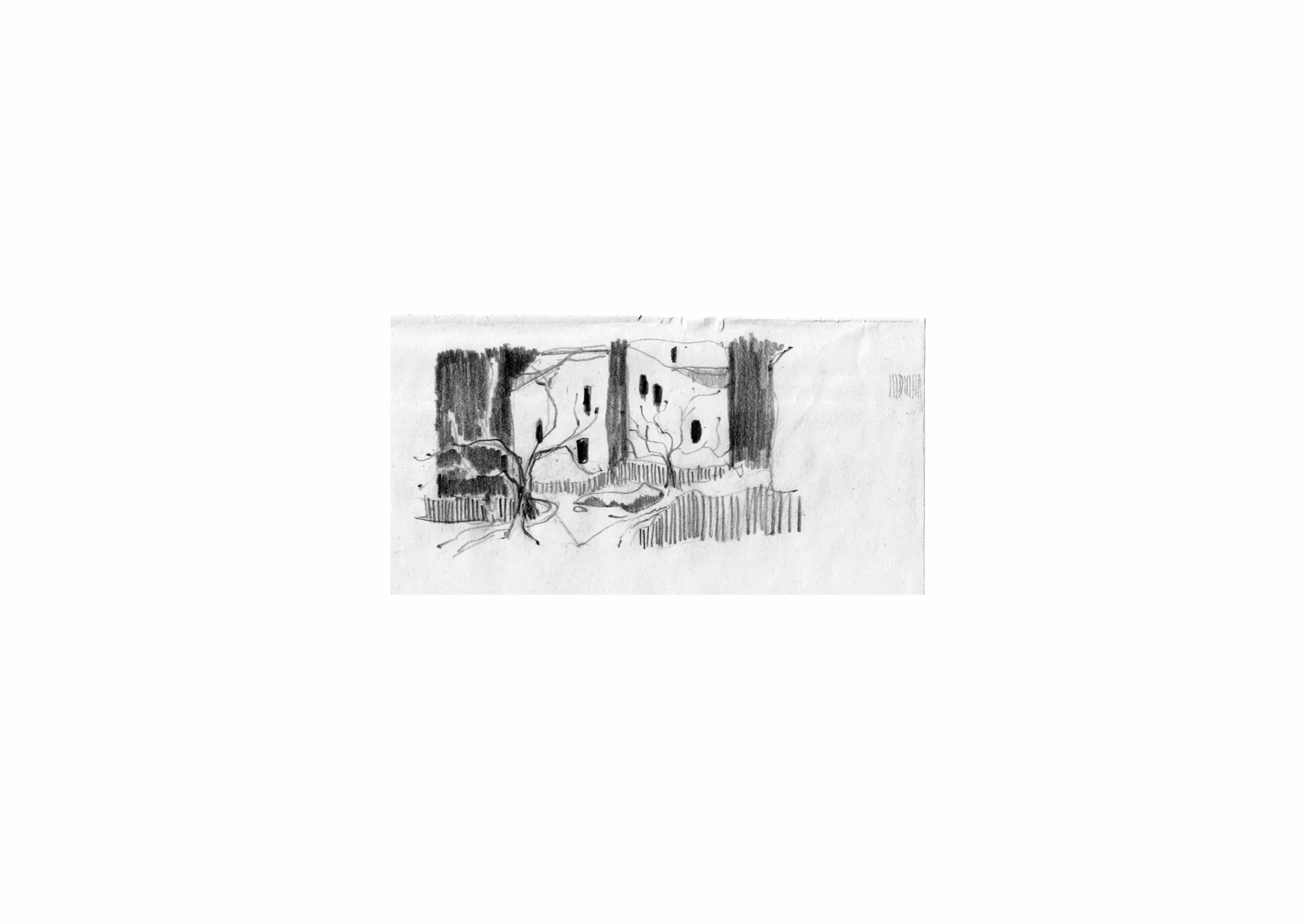
The proposal envisions the development of a 29-villa complex in the Bourboulos area of Santorini, Greece. Santorini is a volcanic island located in the southern Aegean Sea. Characteristics of the island include steep terrain, a rocky landscape, and harsh vegetation. Due to the particularity of the topography, it is very common to encounter the ‘ksirolithia’ in the Santorinian landscape. ‘Ksirolithia’ is a method of stacking differently sized stones to create a retaining wall. Initially, it was used by farmers to even out the terrain in order to cultivate it. This method is a vital part of the island’s structure and its vernacular identity. It is so strongly rooted in the landscape that one cannot read the terrain without it. The development is structured by a single unit module, which is multiplied 29 times to meet the desired program requirements. The form of the unit derives from the traditional module and is reshaped to optimize movement, flow, and the number of units in the plot. The units are positioned strategically within the plot, and together with two different types of circulation, outer for vehicles and inner for residents, they create spatial variety and spaces with distinct qualities and purposes. Embracing the conditions and characteristics that define the specificity of the place becomes the focus of the masterplan design. Alongside this, the design philosophy employs various natural and vernacular characteristics, with a strong emphasis on the ‘ksirolithia’ method of building. The relationship between the natural and the programmatic is applied both in plan and section: in plan, with volcanic rock paving in the outer circulation areas and a gradation toward vegetation in the inner common areas of the development. And in section, starting from the parcellation of the landscape and the building bases with the ‘ksirolithia’ and continuing the gradation with the plastered tops of the buildings.